
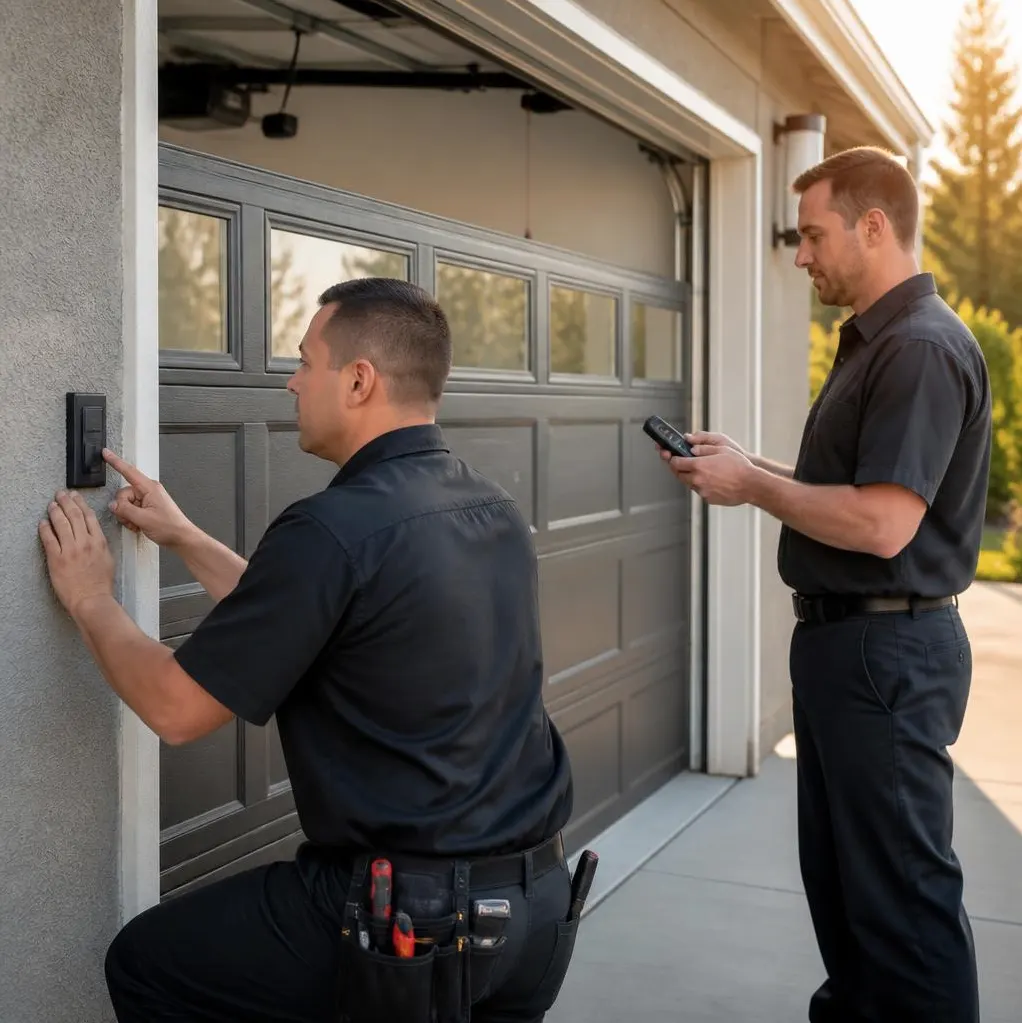
What a technician usually finds on these calls
The call pattern is pretty consistent this time of year: a homeowner describes a loud bang during a windy night, followed by a door that won't open smoothly the next morning. On the service visit, the tech usually finds one of three things: a bent track where the door flexed and slammed back against the rollers, a snapped cable or frayed strand from repeated stress, or weatherstripping that's cracked and pulled away after months of sun exposure, letting wind get a grip on the edge of the panel. None of these start as emergencies. They start as small, ignored warning signs that get worse the first time the wind really pushes on the door.
Why the garage door is the weak point in the wall
A garage door is the largest moving opening in most homes, and unlike a wall or a window, it's only held in place by hardware, not a continuous structural connection. When wind pressure builds against a house, it looks for the path of least resistance. A standard residential door, especially one without reinforcement, can bow inward or outward under sustained gusts. If it fails, wind can push into the garage and pressurize the whole structure from the inside, which is a bigger problem than a damaged door. This is also why, in areas doing earthquake retrofits, it's worth having someone check that the garage door bracing wasn't altered or weakened during that work. A retrofit focused on seismic strapping can sometimes leave track brackets loosened or hardware swapped out without anyone double-checking the wind performance side of things.
Why this matters more right now
October through early winter is when conditions actually test a garage door here. Santa Ana wind events bring sustained gusts and dry, dust-laden air that works grit into rollers, hinges, and track channels. That grit accelerates wear on parts that were already due for lubrication. Then, as the season turns, winter rain arrives, and a door that was fine all summer suddenly has to deal with wind-driven water testing every gap in the weatherstripping. Homes closer to the coast add salt air into that mix, which speeds up corrosion on springs, hinges, and exposed hardware. A door that handled a dry summer without complaint can start showing problems the moment wind and rain show up together.
Steps that actually help before a windy or rainy stretch
- Inspect the tracks for straightness. Stand back and sight down each track. Any visible bend, even a slight one, means the door isn't riding evenly, and that imbalance gets worse under wind load. A bent track should be corrected or replaced, not just bent back by hand.
- Check rollers and hinges for play. Grab a roller and see if it wobbles loosely in its bracket. Worn rollers let the door shift side to side, which is exactly the kind of movement that turns a gust of wind into a slam against the frame.
- Look at the cables and bottom brackets. Frayed strands near the bottom bracket are a sign the cable is close to failing. A cable failure under load, especially during high wind, can let one side of the door drop suddenly.
- Replace cracked or brittle weatherstripping. The vinyl seal along the bottom and sides is the first thing to dry out and split after a hot, dusty summer. Once it cracks, wind-driven rain finds its way in, and that moisture sits against wood trim and drywall.
- Test the auto-reverse safety feature. This isn't just about safety from pinching; it's a sign the opener's force settings are still correctly calibrated. A door that's been struggling against wind resistance can throw those settings off over time.
- Clear tracks and sensors of dust. After a dry, dusty stretch, wipe down the photo-eye sensors and track channels. Dust buildup causes false stops or uneven travel right when you need the door to seal tightly against weather.
- Check for a battery backup on the opener. Storms bring power outages. A battery backup means the door can still be opened and closed manually or electronically when the power drops, which matters if you need to secure the garage during a storm.
Reinforcement worth considering
For doors that flex visibly in wind, or for anyone who's had a panel dent or bow before, a horizontal strut kit across the back of the panels adds real rigidity without replacing the whole door. It's a modest investment compared to a full replacement and makes a noticeable difference in how the door handles sustained gusts. Homeowners in more wind-exposed spots, or those who've already had wind-related damage, tend to see the most benefit from this upgrade.
When to call San Diego Overhead Garage Door
If you notice a bent track, a door that shudders or bangs during wind, cables with visible fraying, or weatherstripping that's cracked through, it's time to get it looked at before the next storm rolls in rather than after. Our techs handle garage door repair for exactly these issues, from straightening or replacing damaged tracks to correcting cable and spring tension so the door operates evenly under load. If the door's hardware is older, is a corrosion risk from coastal salt air, or needs that strut reinforcement, our garage door maintenance service covers a full inspection and tune-up so small wear doesn't turn into a wind-related failure later. For anything that can't wait, including a jammed door or hardware that gave way mid-storm, our emergency service is built for exactly that kind of call.
If your garage door has been making noise, flexing in the wind, or just hasn't been looked at in a while, now is the time before the season turns. Call San Diego Overhead Garage Door for an inspection, and let's get your door ready for whatever this fall and winter brings across San Diego, Poway, Rancho Bernardo, Encinitas, and the rest of North County.