
The One-Sentence Rule
If a door opens and closes more than a handful of times a day, supports its own weight across a wide span, or gets driven under by something bigger than a sedan, it's a commercial-grade door and needs commercial-grade parts and upkeep — not the same treatment as the door on your house.
The exceptions: a lot of homes in this area have oversized garages for RVs, boats, or home workshops, and those doors sit in a gray zone. They look residential, but if they're used hard — multiple openings a day, heavy loads, a business run out of the garage — they wear like commercial doors even though they were sold as residential ones. That mismatch is usually where the argument starts.
What Actually Makes a Commercial or Warehouse Door Different
It's not just size. A few things separate a true commercial door from a residential one:
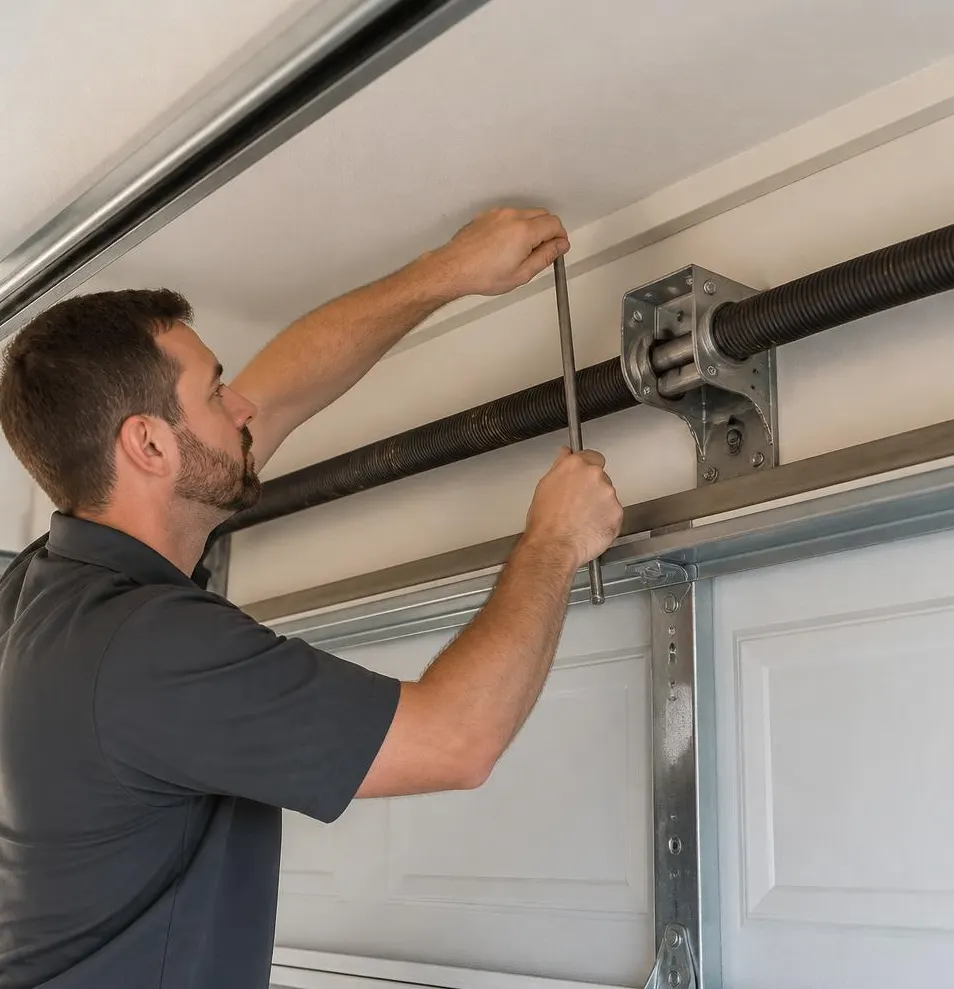
- Spring systems: Commercial doors often use heavier torsion springs rated for tens of thousands of cycles, sometimes with a second spring as backup so the door doesn't slam down if one fails. Residential springs are rated for a few thousand cycles — fine for a household, not for a door opening 20+ times a day.
- Track and panel gauge: Warehouse doors use thicker steel and heavier-duty rollers and hinges because the door is doing real work, not just covering a parking spot.
- Opener horsepower and duty cycle: A residential opener is built to run occasionally. Commercial operators are rated for continuous or frequent use and often have added safety features like photo-eye sensors and edge sensors required for higher-traffic settings.
- Insulation and weather sealing: Warehouse doors frequently have thicker insulation and heavier seals, partly for temperature control and partly because they're exposed to more weather cycling over the course of a workday.
Where This Gets Confusing at Home
Plenty of local houses have detached garages, workshops, or RV bays with doors that look like a standard residential door but get used like a commercial one. If someone is running a business out of a garage, storing a work vehicle that comes and goes daily, or using an oversized door for a boat or RV, the door is absorbing commercial-level wear on residential-grade parts. That's usually when springs wear out faster than expected, openers burn out early, or rollers and hinges start sagging years ahead of schedule. If that's the situation, upgrading the spring system or opener to something rated for heavier use is often the fix — not replacing the whole door.
Maintenance Changes With the Door Type — and With the Climate Here
Commercial and heavy-use residential doors need more frequent attention than a typical household door, and the local weather adds its own wear pattern on top of that:
- Dust and dry-season grit: Dry months bring dust into tracks and rollers, which turns to grinding paste if it mixes with old lubricant. Heavy-use doors need tracks wiped and relubricated more often than the once-or-twice-a-year schedule that works fine for a door that only opens twice a day.
- Wildfire smoke and ash: Fine particulate can work into opener sensors and weatherstripping. Doors that cycle constantly pull more of it through the seals, so sensors and photo eyes on high-use doors are worth checking more frequently for a hazy film that can throw off the safety reverse.
- Coastal salt air: Closer to the water, salt accelerates corrosion on springs, hinges, and hardware. A heavy-use door near the coast needs hardware inspected for rust more often than an inland door with the same cycle count.
- Winter rain and earthquake retrofits: Heavier doors put more stress on the wall opening and track anchors. If a home has had seismic retrofitting done, it's worth confirming the garage door track and header anchoring were accounted for — a heavy-use door pulling on a retrofit frame is a different load case than a light residential door.
When to Call San Diego Overhead Garage Door
If your garage door is getting workshop- or business-level use — frequent cycling, heavy loads, or it's attached to a home-based operation — it's worth having the spring system and opener evaluated for whether they're rated for that kind of duty. We handle spring replacement with heavier-duty options when a standard residential spring is wearing out too fast, and we offer garage door maintenance visits that check rollers, hinges, hardware, and opener sensors for the kind of wear that heavy use and local dust, smoke, or salt air can cause. If something's already sagging, slow to close, or making a new noise under load, that's worth a look before it becomes an emergency call.
If your garage door is working harder than it was built for, give San Diego Overhead Garage Door a call — we serve San Diego, Poway, Escondido, Rancho Bernardo, Del Mar, Encinitas, Carlsbad, and La Jolla, and we can tell you plainly whether you need a repair, an upgrade, or just a better maintenance routine.